



Most creators started this business because they liked making content, the same thing that keeps their subscribers around. Instead, they spend most of the day replying to strangers' direct messages and managing demands that have nothing to do with content at all.
There are not enough hours in a day, and the workload only grows as the subscriber base does. At some point almost every creator asks whether answering DMs personally is still the best use of their time.
They are not wrong to ask. A successful OnlyFans page needs more than good content. On most accounts, 80 to 95 percent of monthly revenue comes from pay-per-view unlocks, tips, and custom requests inside the DMs, not from the subscription price itself. That means the chat is not a support function bolted onto the business. It is the sales floor.
This guide covers how to run a chatter service as an agency: training chatters, building repeatable workflows, and using metrics to grow revenue from existing subscribers while keeping costs under control.
Understanding Chatter Services and Their Role in Growth
If chat is where most of the revenue happens, it needs to be treated like a sales channel, not a customer service line. The chatters who do this well combine two things: a working knowledge of buyer psychology, and consistency across every conversation a fan has with the account.
What a Brand Voice Actually Requires
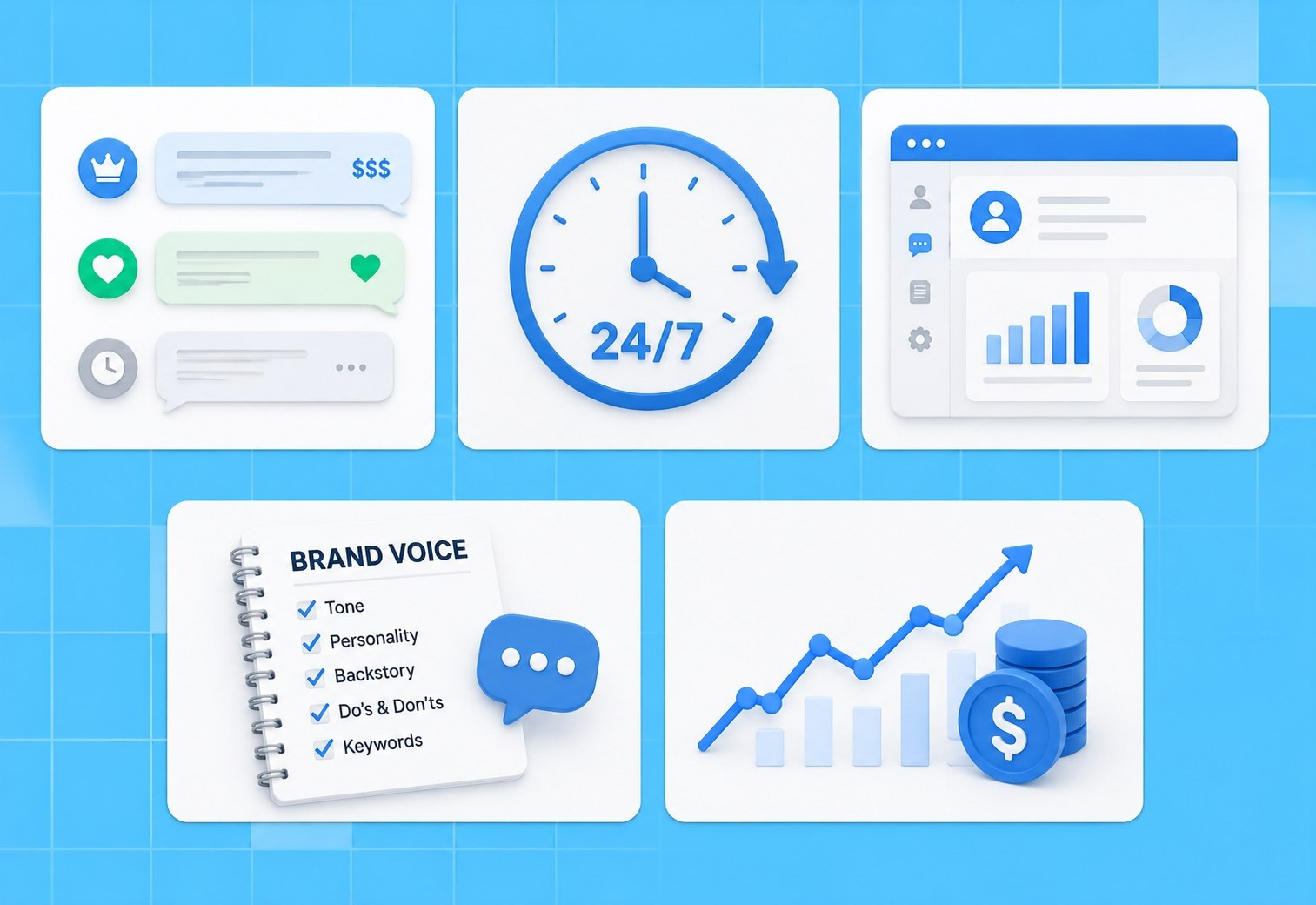
A chat team of any size needs a documented brand voice, not a vague sense of “how she talks.” Every person touching the inbox, chatters, shift leads, the manager, needs to agree on tone before a fan ever sees a message.
A real brand voice document does more than list adjectives like “playful” or “flirty.” It gives chatters the backstory: the creator's cover story about her job or hometown, three or four running jokes or callbacks she uses, specific slang she does or doesn't use, and a few real details fans respond to (a pet's name, a favorite drink, a made-up but consistent daily routine). Without that reference sheet, a new chatter has nothing to draw on except generic scripted lines, and fans notice the difference between a real personality and a template.
Training Chatters to Handle Different Fan Types
Effective training covers two things: reading buyer psychology and reacting to it fast. A chatter's first job in any conversation is figuring out what type of fan they are talking to, because the right response depends on it.
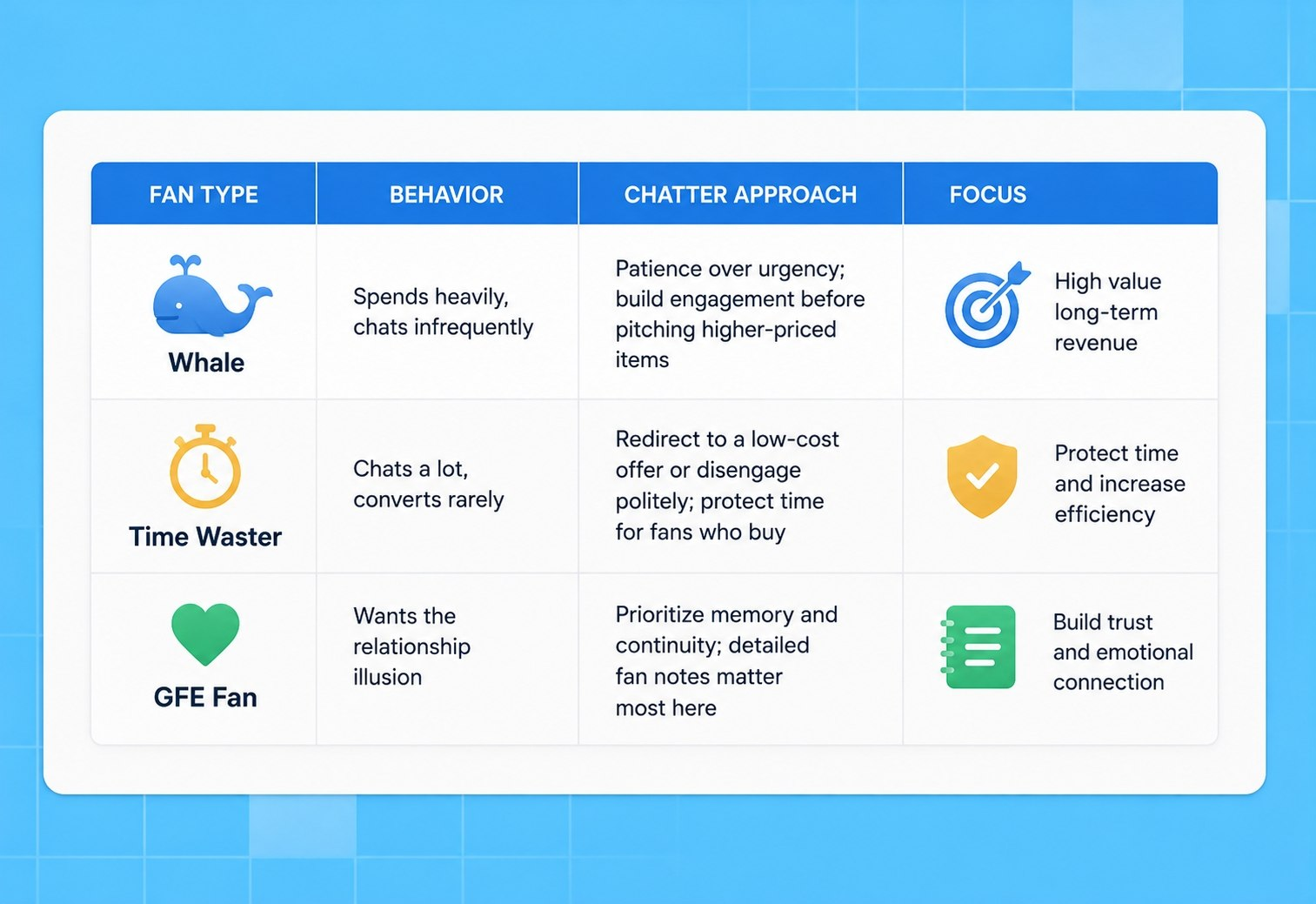
Three types show up in almost every account:
| Fan type | Behavior | Chatter approach |
|---|---|---|
| Whale | Spends heavily, chats infrequently | Patience over urgency; build engagement before pitching the higher-priced item |
| Time waster | Chats a lot, converts rarely | Redirect to a low-cost offer or disengage politely; protect time for fans who buy |
| GFE fan | Wants the relationship illusion | Prioritize memory and continuity; detailed fan notes matter most here |
Tools and Platforms Used to Manage High-Volume Chats
Once an account is handling more than a handful of conversations a day, the native OnlyFans inbox is not enough. Agencies run their chat operations through a dedicated CRM built for OnlyFans, most commonly Infloww or Supercreator, alongside smaller tools built for specific platforms like Fansly or Chaturbate.
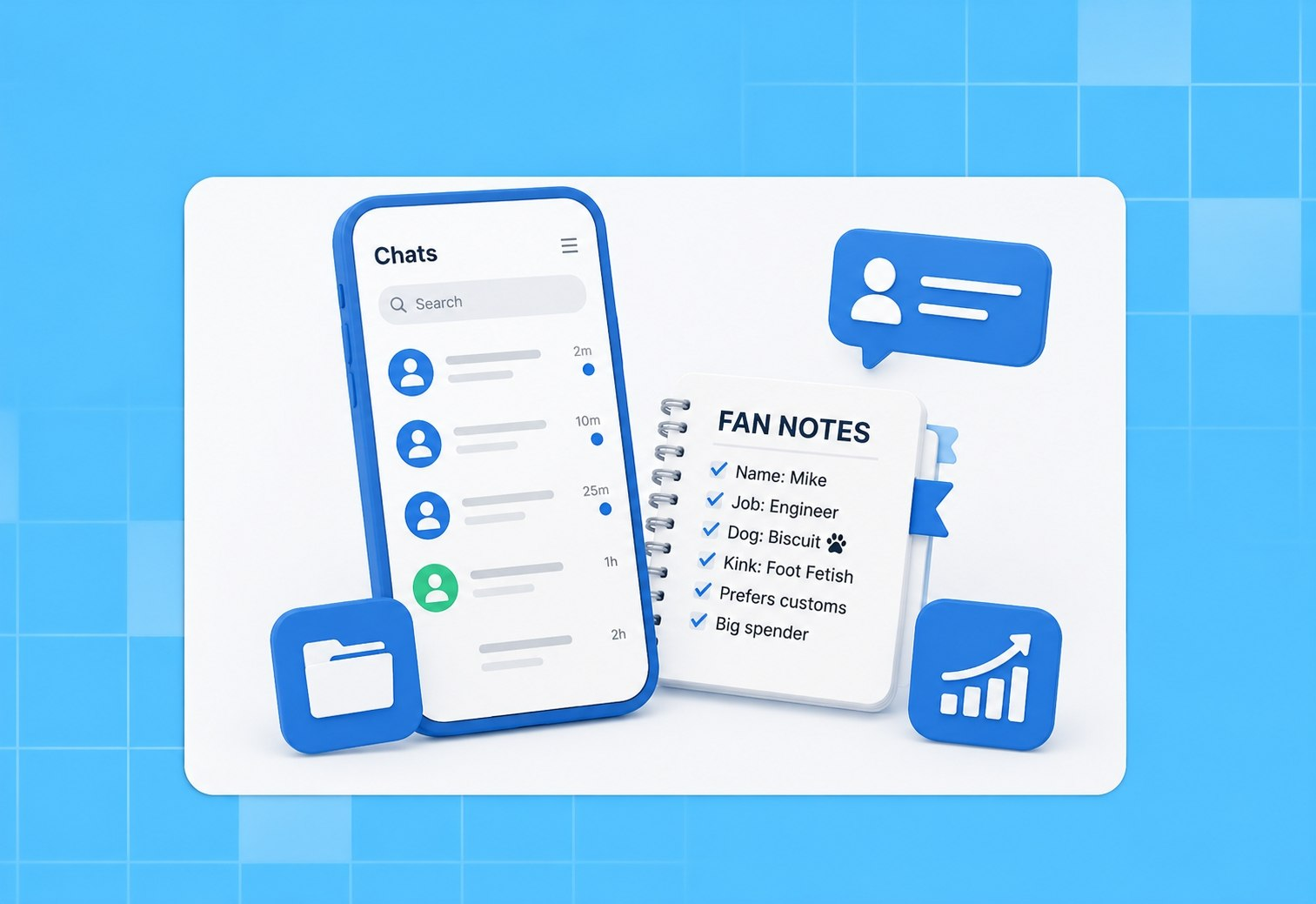
These platforms centralize the account's content vault so a chatter can attach a photo or video in a couple of clicks, support saved replies and shortcuts for common questions, and, most importantly, let every chatter attach notes to a fan's profile: their job, their pets' names, specific kinks, past purchases, and anything mentioned in earlier chats.
Those notes are what let a fresh chatter pick up a conversation at 3 a.m. without it reading like an automated reply from a stranger. A fan who mentioned his dog Biscuit last week and gets asked about Biscuit tonight assumes he is talking to the same person he always talks to. That continuity is the product.
Daily Operations of a High-Performing Chatter Team
Once the structure above is in place, results come down to how disciplined the daily workflow is. Day-to-day execution, not strategy documents, is what actually moves conversion rates and revenue.
Handling New Leads, Paid Messages, and Upsells
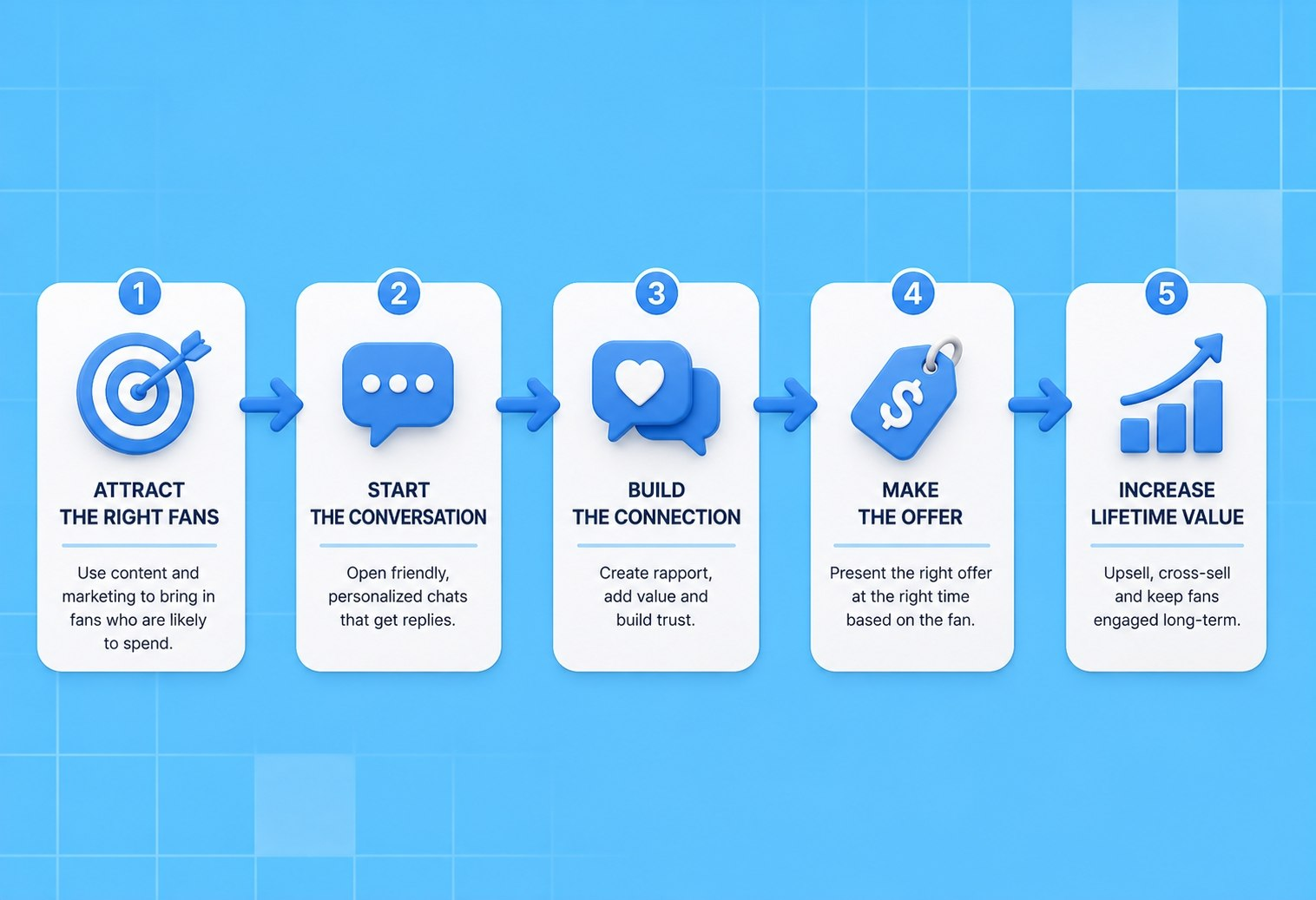
New subscribers get first priority. Their first automated welcome message is written specifically to get a reply, because a fan who responds once is far more likely to engage again and to eventually buy.
Second priority is “paid messages”: fans who just unlocked a PPV and are now replying. These are the hottest leads in the inbox, since they have already proven they will pay. The chatter's job is to acknowledge the purchase (“I loved shooting that one for you”) and immediately offer a related upsell at a higher price point, a personalized video or a private photo set tied to what they just bought.
Maintaining Consistent Tone Across Shifts
The hardest operational problem in a multi-chatter team is voice consistency. One chatter calling a fan “babe” and the next calling the same fan “darling” breaks the illusion that they are talking to one person.
The fix is a structured shift handover: before taking over, the incoming chatter reads the last several messages with every high-value fan currently active, plus that fan's notes, before sending anything. Teams that skip this step are the ones where fans start asking “wait, who is this?”
Genuine engagement also requires chatters to actually track what a fan tells them, not just ask follow-up questions for the sake of it. If a fan mentions his sister's wedding is next month, the chatter who brings it up three weeks later is doing the job. The chatter who never mentions it again is running a script, and fans can tell.
Managing Time Zones and 24/7 Response Coverage
Subscriber bases skew international, and a large share of spending happens outside a single time zone's business hours, late at night and on weekends, when discretionary spending on a phone is highest.
For accounts doing meaningful revenue, the standard is three overlapping eight-hour shifts: one covering US daytime, one covering US evening, and one overnight shift that catches European and Asian fans while the US sleeps.
The operational challenge is handoff quality, not staffing. Each shift needs a short written summary of anything unresolved (a fan waiting on a custom video quote, a whale mid-conversation, a complaint) so the next shift doesn't start blind.
Integrating Chatters Into Overall OnlyFans Marketing and Management
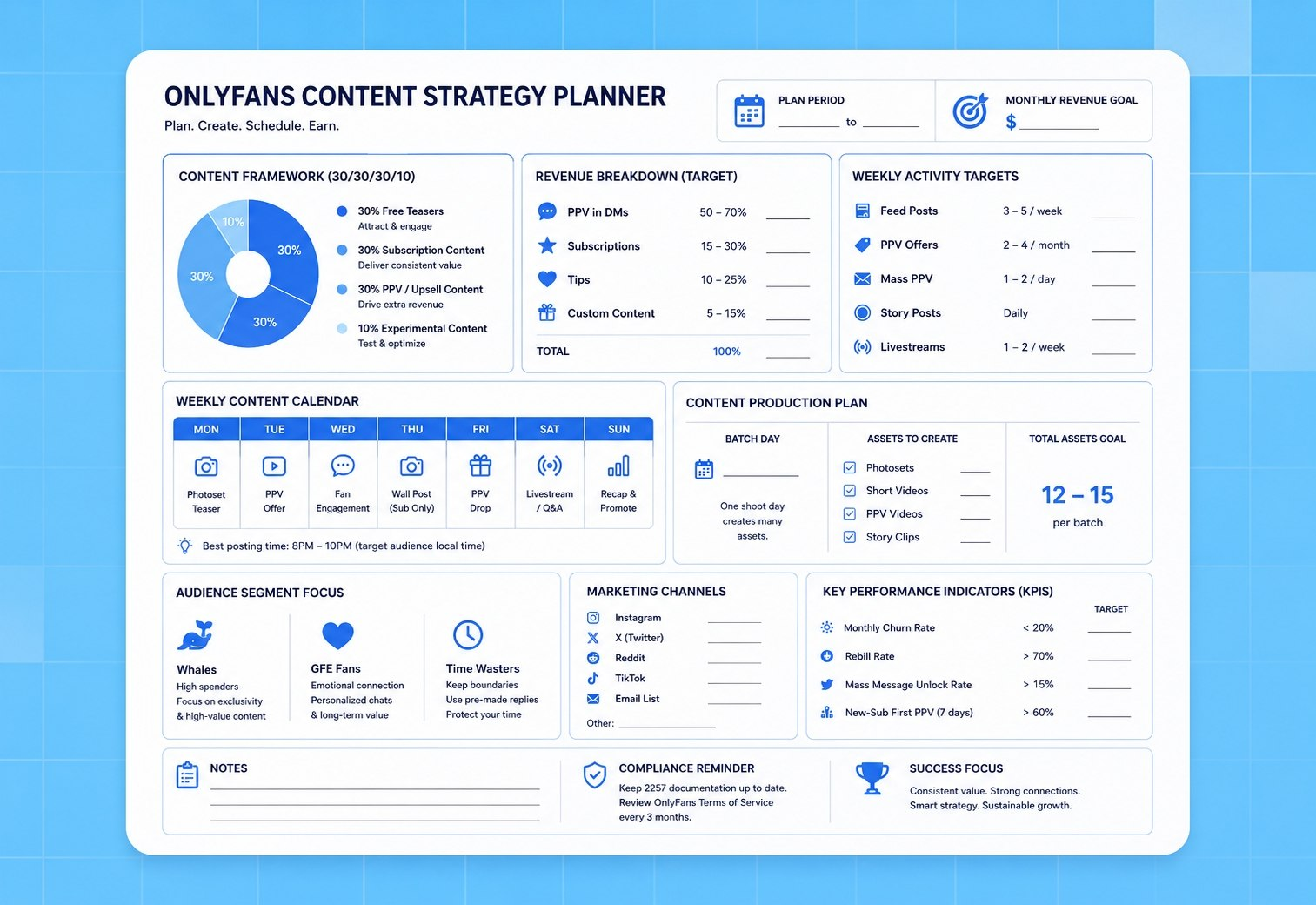
The chat team cannot run in isolation from the rest of the business. They are the only people with direct, real-time contact with fans, which means they need to know the content calendar in advance and feed information back the other direction too.
Aligning Chat Strategies With Content and Promotions
Tell the chat team about planned content well ahead of the release, not the day it drops. If a themed set is coming (“Nurse Week,” a cosplay set, a collab), chatters can start teasing it days in advance: “I just shot something for Nurse Week and the outfit is not subtle.” That anticipation is what drives a spike in sales the moment the content actually goes live, instead of a slow trickle.
The same channel runs in reverse. When chatters notice a pattern, several fans in one week asking for a specific kink or format, that is real-time market research the creator can act on before spending a shoot day on content nobody asked for.
Coordination Between Chatters, Managers, and Creators
Clear, structured communication is what holds an agency together. The chat team surfaces what fans want, what they will pay, and any custom requests. The manager filters that into specific, actionable notes for the creator: “fans are asking for more outdoor content” or “the $50 bundle is outselling the $100 one two to one.”
Custom video requests specifically need a manager in the loop. If a chatter closes a custom sale but the request never reaches the creator in writing, the creator either misses the deadline or delivers something that doesn't match what was promised, either of which usually ends in a refund and a subscriber who doesn't come back.
Ensuring Compliance and Ethical Chatting Practices
OnlyFans' terms of service ban soliciting or arranging in-person, sexual encounters through the platform, and a violation can get an account permanently banned with any unwithdrawn balance forfeited. Chatters should never initiate, agree to, or even joke about meeting a fan in person while representing the account; even a joking reference has been enough to trigger enforcement in reported cases, so the safest policy is a flat no.
Non-sexual meetups exist in a grayer area and are not explicitly banned, but the platform actively discourages arranging any in-person meeting through DMs, so most agencies treat this the same way: don't do it, don't discuss it, don't leave room for a fan to misread it.
Agencies commonly give chatters a list of flagged words and phrases that automated OnlyFans filters scan for, so chatters know what triggers a review before they type it, rather than finding out after an account gets flagged.
Tracking Chatter Performance and Improving Results
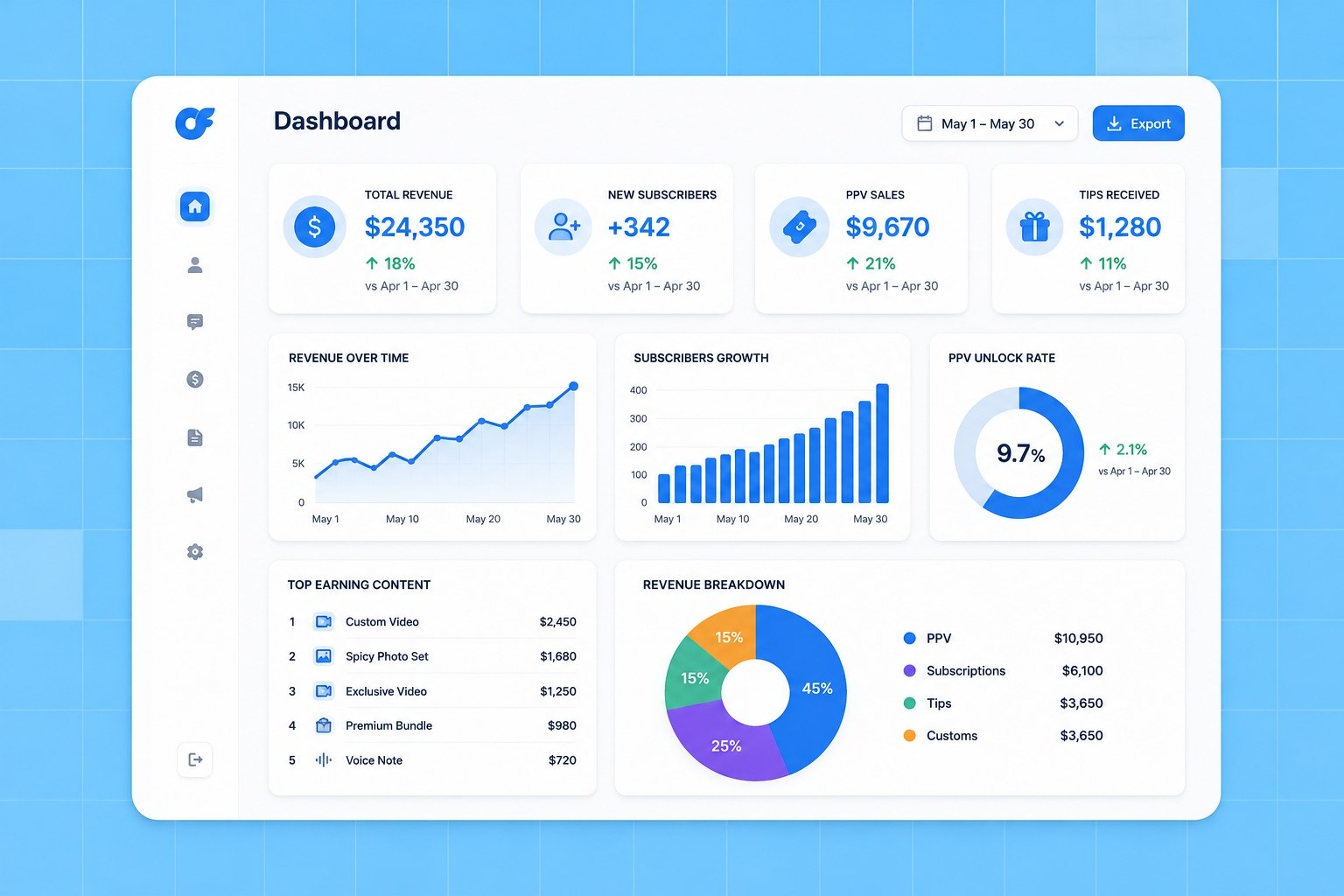
Gross revenue alone doesn't tell you which chatter is actually good at the job. A useful performance system tracks individual output, not just account totals.
Key Metrics for Chatter Success
| Metric | What it measures | Rough benchmark |
|---|---|---|
| Response time | Speed of first reply during active hours | Under 30 min; top performers 1-10 min |
| PPV conversion rate | Share of PPV messages unlocked | High teens to low 20s is solid; under 10% needs a look |
| ARPU | Revenue per fan over time | Higher = more repeat tips/unlocks, not just new leads |
| Shift revenue vs. labor cost | Profitability per shift | Flags shifts costing more than they return |
Response time matters more than most new agencies expect. A fan who gets a reply within five minutes is several times more likely to buy than one who waits over an hour, because impulse purchases fade fast.
PPV conversion rate is the clearest measure of a chatter's closing ability, though it varies a lot by niche and price point.
Average Revenue Per User (ARPU) shows whether a chatter builds relationships that pay off repeatedly, not just one-off sales.
Shift revenue relative to labor cost tells you which shifts and which chatters are actually profitable, and which need restructuring.
Reviewing Chat Logs to Identify Conversion Opportunities
The chat manager's core job is quality control: regularly reading back through chat logs, not just watching the revenue dashboard. A log review catches things a metrics report can't, like a chatter missing an obvious upsell opportunity.
For example, if a fan mentions a bonus or gift they just received, that's an opening to pitch a higher-priced custom video. A chatter who lets that pass without a follow-up cost the account a sale that a log review would catch and a script update would prevent next time.
Log reviews also surface where fans go quiet mid-conversation. If the same drop-off point shows up across multiple fans, whether it is a price, a preview image, or a specific pitch line, that is a signal to adjust, not a coincidence to ignore.
FAQs
How many chatters does a growing OnlyFans account need?
It depends on message volume more than subscriber count. Below roughly $5,000 a month, most creators can still handle chat solo. Between $10,000 and $30,000, one or two chatters covering peak hours is usually enough. Past $50,000 a month, accounts typically need round-the-clock coverage, which means a team of three or four working overlapping shifts.
What skills does a professional OnlyFans chatter need?
Strong writing and emotional intelligence come first. A sales background helps, since closing a PPV sale is a sales conversation with extra steps. Chatters also need patience with difficult fans, comfort adapting tone across different personas, fast typing, and fluency with whatever CRM the agency runs on.
How much do OnlyFans chatter services typically cost?
Most operate on commission rather than a flat hourly rate, which keeps incentives aligned. Chatting-only services, where the agency just staffs the inbox, typically run 10 to 20 percent of the revenue they generate. Full-service agencies that also handle content strategy, marketing, and account management charge more, commonly 20 to 40 percent. Some smaller agencies add a modest base retainer on top of commission when an account's volume is still low. Either way, this is on top of the 20 percent OnlyFans already takes off the gross, so it's worth calculating the actual take-home before signing.
Can creators manage chats themselves instead of hiring a team?
Yes, and most should start that way. Handling chat personally in the early months is how a creator learns what their audience actually responds to and finds their own voice before handing it to someone else. As the account grows, though, chat starts eating hours that could go toward filming or promotion, which is usually the point where creators bring in a freelancer or a small team rather than doing everything themselves indefinitely. For a full breakdown of both paths, see our comparison of OnlyFans agency vs. DIY management.
Conclusion
Growing a creator page takes more than being good on camera. Structured chatter services let a creator turn the hours they'd otherwise spend answering DMs into actual revenue growth, without spending those hours personally.
The pieces that matter are a documented brand voice, chatters trained in sales psychology and fan-type recognition, real around-the-clock coverage, and strict compliance with platform rules.
That last point is not optional. A chat team run well is not a cost center. It is the part of the business generating most of the revenue, and it should be measured, staffed, and paid like it.
Related insights
Compare your options
Browse agency rankings or compare tools for creator teams.