



Every list of top OnlyFans earners repeats the same headline numbers without asking the obvious question: how much of that money is real, and how much can a creator starting from zero actually replicate? The platform has paid out more than $25 billion to creators since 2016, but that money is distributed about as unevenly as money can be.
This guide covers who earns what, where the income actually comes from, and the system behind creators who build six-figure businesses without starting famous.
One caveat before the names: almost every figure you'll see is gross lifetime revenue - the total before OnlyFans' cut, taxes, and costs. Treat monthly "$X million" claims with suspicion; they often inflate the number or pass off a lifetime total as a single month.
One caveat before the names: almost every figure you’ll see is gross lifetime revenue - the total before OnlyFans’ cut, taxes, and costs. Treat monthly “$X million” claims with suspicion; they often inflate the number or pass off a lifetime total as a single month.
Celebrity earners and the fame advantage
Celebrities top every earnings list because they arrive on day one with millions of followers and free media coverage. Blac Chyna reportedly holds the record at around $240 million; Cardi B (~$108M) and Erica Mena (~$54M) leaned on behind-the-scenes access and exclusives more than explicit content. Bella Thorne earned about $1 million in her first 24 hours in 2020 - and triggered a wave of chargebacks that pushed OnlyFans to change its payout and pricing rules for everyone who came after.
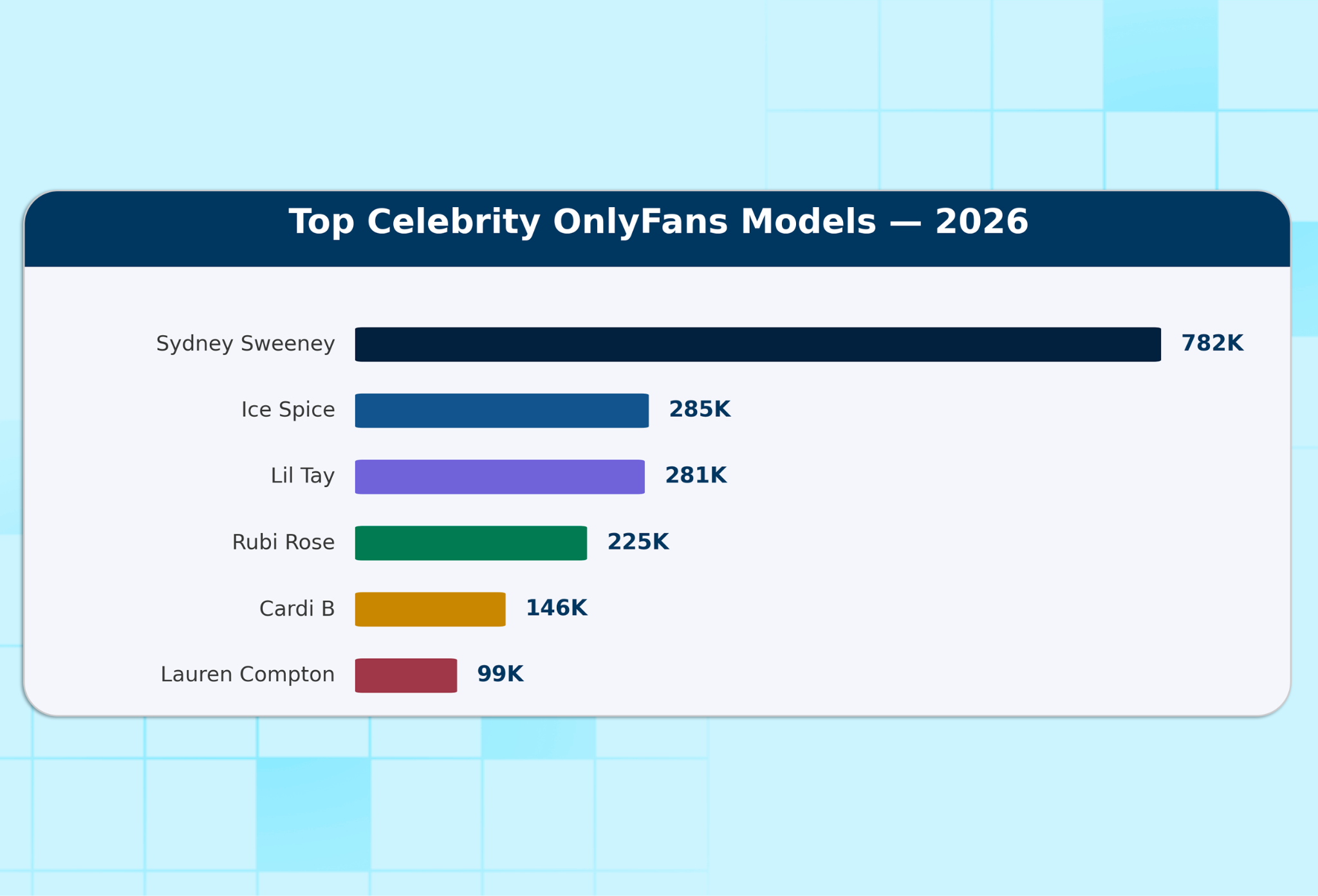
The pattern across celebrity accounts is consistent: big spikes around media moments, quiet stretches in between. Fame generates bursts, not stability, which is exactly why celebrity numbers are misleading benchmarks.
So don’t study how much a celebrity makes - study how they convert a warm audience. A famous creator posts “I’m on OnlyFans, link in bio” and monetizes people who already know them. That conversion skill is learnable. The hard part was never monetizing an audience; it’s building one.
| █ Famous first Starting audience Millions, ready on day one Time to first revenue Hours - Bella Thorne: $1M/24h Income pattern Spikes, then quiet stretches Main risk Boom-and-bust; rarely sustained | █ Built from scratch Starting audience Zero - grown on Reddit, TikTok, X Time to first revenue Months to years of pre-launch Income pattern Steady, brand-driven, compounding Main strength Sustainable - Sophie Rain $43M+ |
|---|
Non-celebrity earners who built from scratch
The bigger story is the creators who started with no audience and now rival celebrity accounts. Sophie Rain is the clearest case: she grew through TikTok and Instagram to a reported $43 million+ - the top non-celebrity creator on the platform - without any prior fame. Belle Delphine built a cult following through cosplay and viral stunts, then converted roughly $12 million from a loyal niche willing to pay premium prices. Jem Wolfie turned a fitness Instagram into an estimated $12 million; when Instagram banned her, her income barely moved because her subscriber base was already locked in.
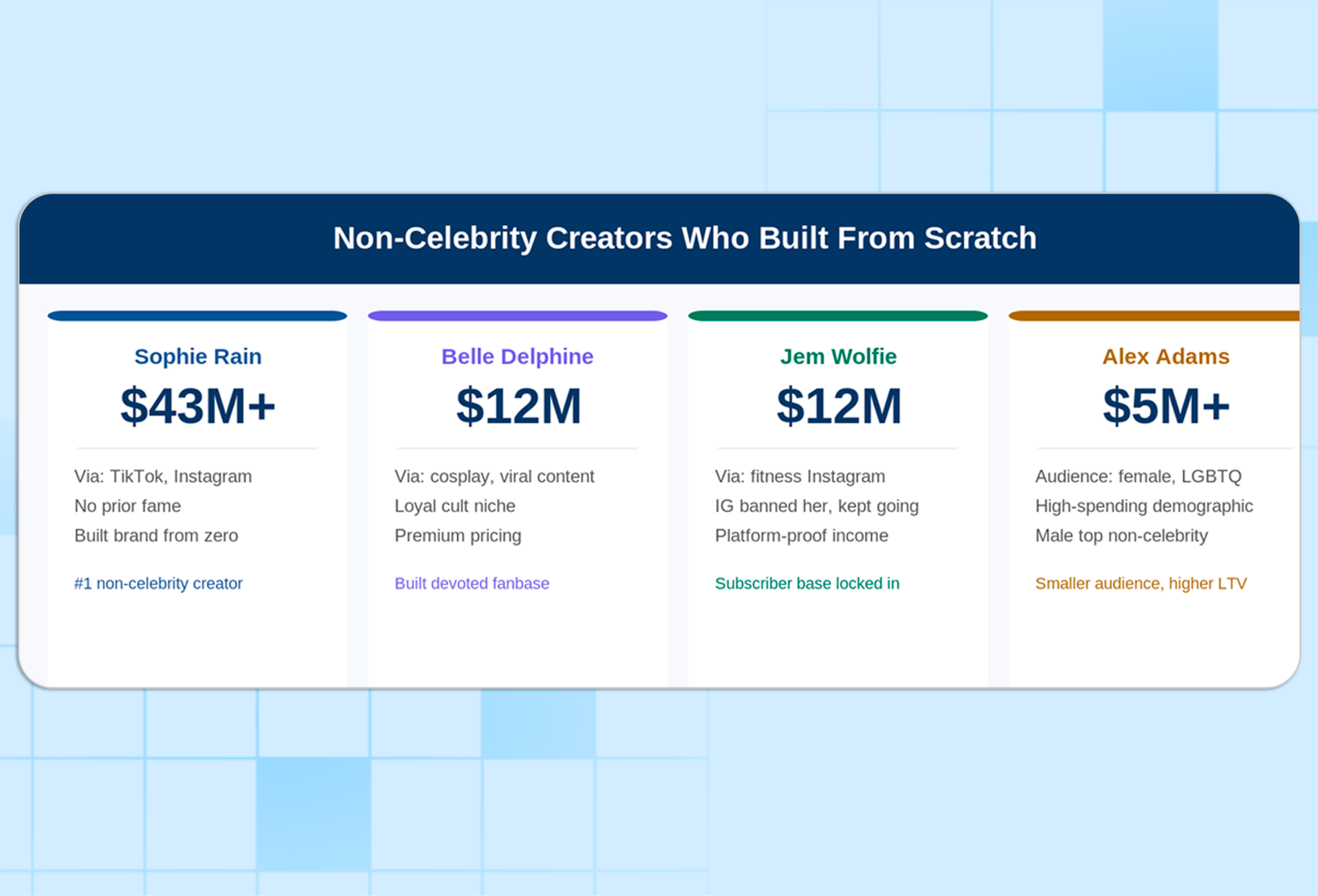
None of this happened overnight. These creators spent years building a brand on Reddit, X, and TikTok, then used OnlyFans to monetize it. What they share isn’t luck - it’s that none of them tried to run the whole operation alone.
What top earners actually take home
Here’s the part every “top earners” list skips: the headline number is not the bank balance. A creator “making $50,000 a month” doesn’t keep $50,000.
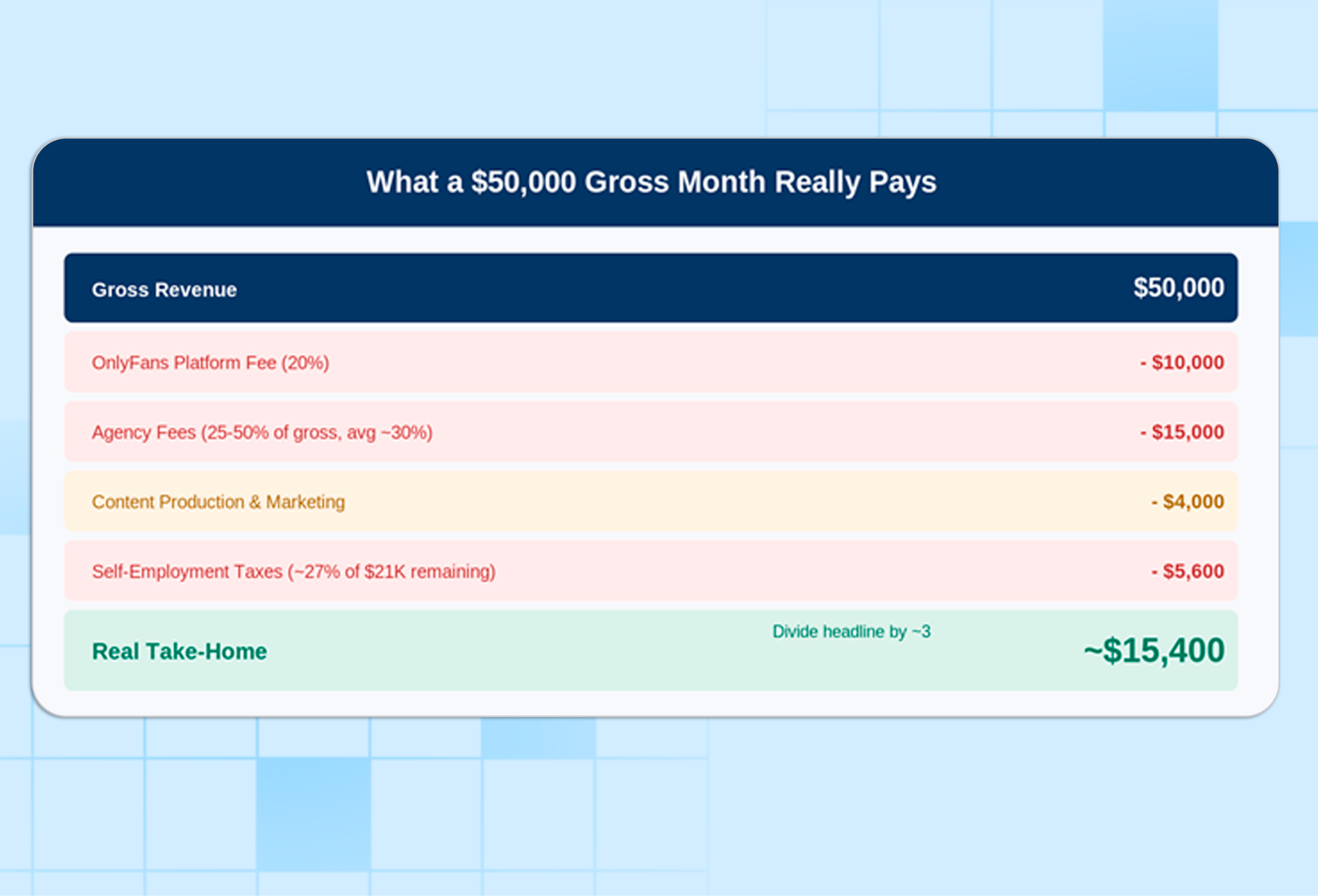
OnlyFans takes a flat 20%. Management - if the creator works with an agency - runs 25-50% of gross. Content and marketing cost more. Then taxes (including self-employment tax) claim roughly 30-40% of what’s left.
The rough rule: divide the headline number by three to estimate the real take-home. A $50,000 gross month lands near $15,400.
A $120,000 month - among the largest managed account has reported nets something like $40,000-$50,000. Still excellent money, but a very different story from the headline.
The earnings gap most lists ignore
Those numbers sit at the top of a very steep curve. OnlyFans has one of the most unequal income distributions of any platform - a Gini coefficient around 0.83, higher than the wealth inequality of any country.
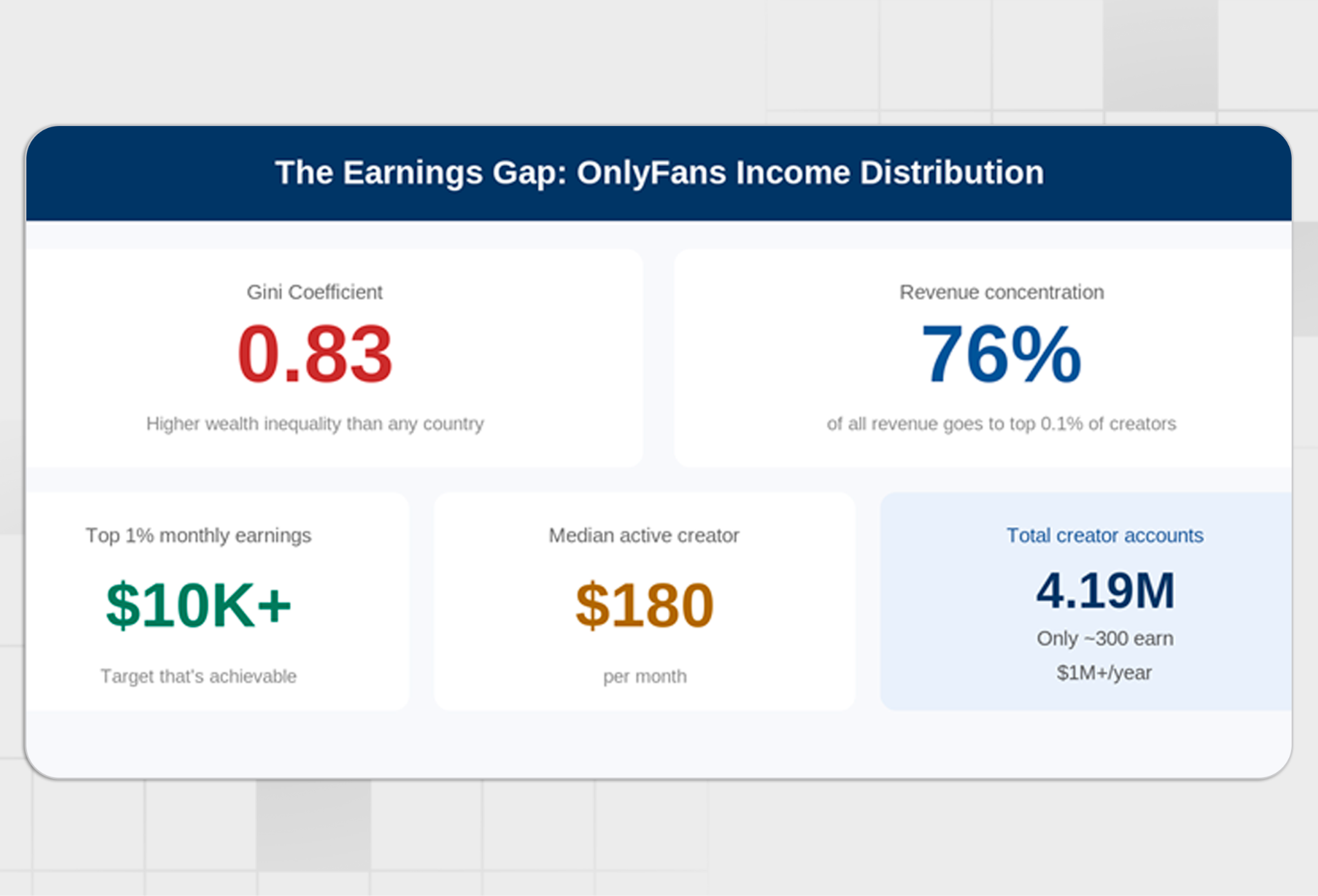
The median active creator earns roughly $180 a month. The top 0.1% take about 76% of all revenue. Of 4.19 million creator accounts, an estimated 300 earn more than $1 million a year. The flip side is encouraging: making $10,000 a month already puts a creator in the top 1%. You don’t need Sophie Rain’s numbers to do well - you need a realistic view of where you sit.
Where the money actually comes from
The biggest misconception about OnlyFans income is that it comes from subscriptions. It doesn’t.
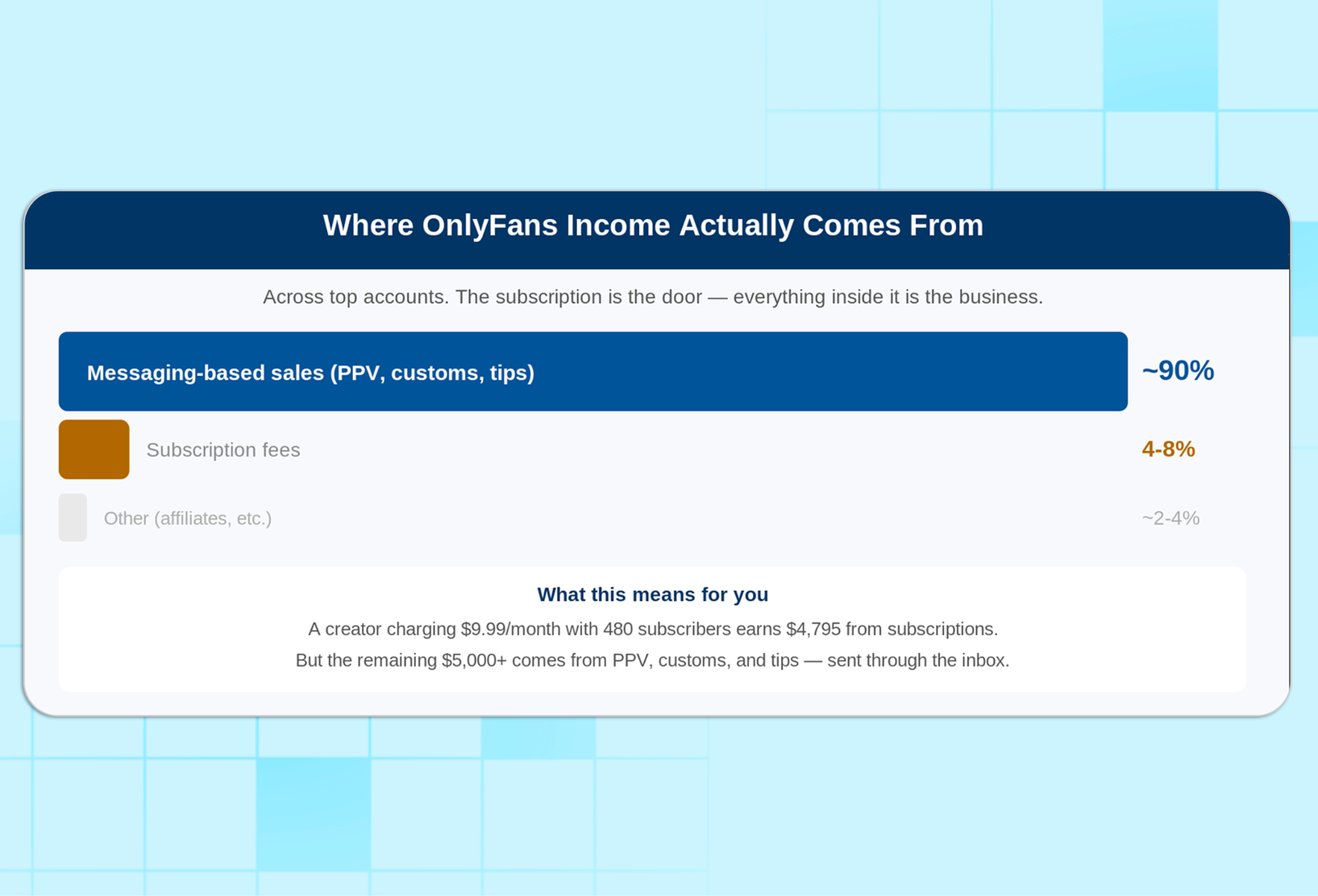
Across top accounts, roughly 90% of revenue comes from messaging-based sales - PPV unlocks, tips, custom requests - and only about 4-8% from subscription fees. Top earners don’t rely on one stream; they build a stack.
The subscription is the door. Everything after someone walks through it is where the business lives.
Subscription pricing: free vs paid
| █ Free page Entry barrier $0 - anyone can follow Audience size Large - thousands of followers Subscription revenue $0 directly Primary role Funnel for PPV and upsells | █ Paid page Entry barrier Monthly fee (e.g. $9.99) Audience size Smaller - pre-qualified payers Subscription revenue Steady baseline from each fan Primary roleRecurring rent floor |
|---|
The subscription is the entry ticket, and there are two models.
A paid page charges a monthly fee (around $9.99 is common) - everyone there has already paid, but the fee deters new fans who haven’t seen anything yet. A free page charges nothing, so it can gather thousands of followers; you earn no subscription revenue, but you have a large audience to sell PPV to. Most serious operations run both: the free page funnels SFW teasers to pull fans toward the paid page or direct PPV.
PPV and custom requests
Think of subscriptions as rent and pay-per-view as profit.
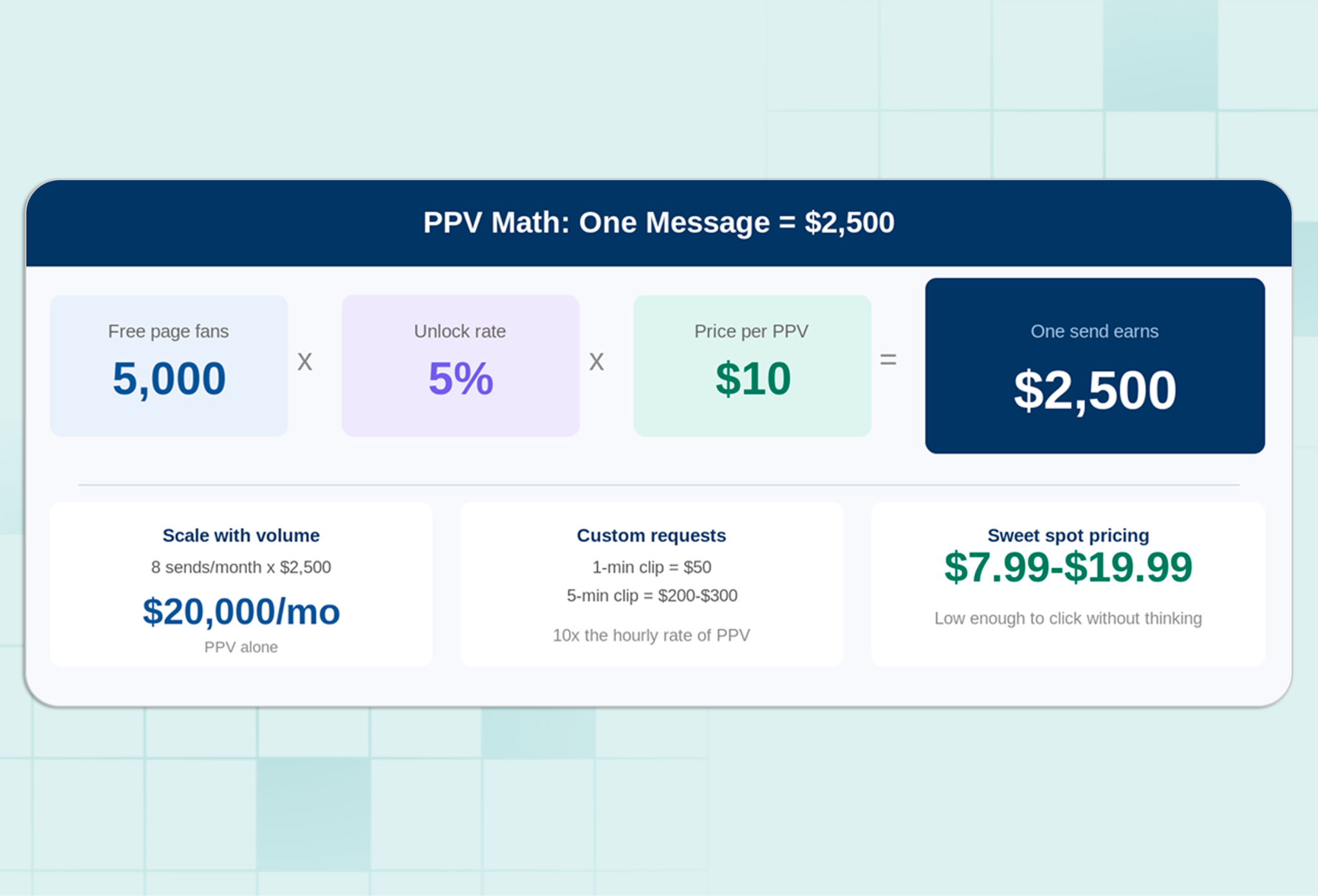
PPV means sending bulk messages with pre-recorded content priced for impulse - usually $7.99 to $19.99, low enough that fans don’t deliberate. It’s a numbers game: send a $10 video to 5,000 free-page fans, convert just 5%, and that single message earns $2,500. Custom requests are the premium tier - personalized content priced by time and effort. A one-minute personalized clip might go for $50; a five-minute custom request for $200, $300, or more. Customs can multiply a creator’s rate tenfold.
The full revenue stack
Beyond subscriptions, PPV, and customs, top earners add tips (often via a posted tip menu), live-stream tipping, physical items (worn items, signed polaroids) with high margins, and affiliate commissions from lingerie, toy, or partner brands.
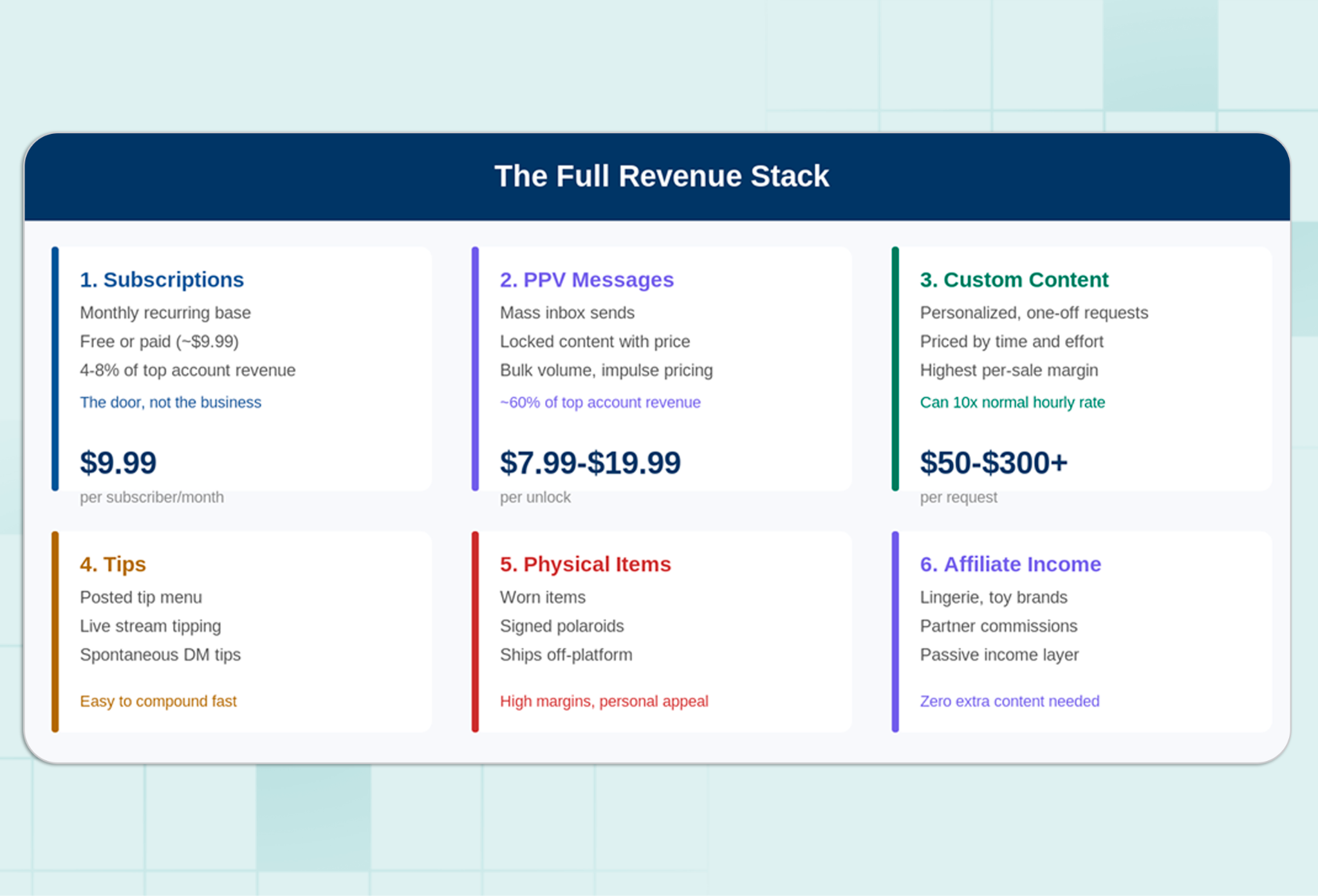
The page isn’t a video feed - it’s an e-commerce store selling several products in one place.
Niche targeting and audience funnels
Trying to appeal to everyone is the fastest way to disappear. The most successful creators own a specific niche - the girl next door, the alt girl with tattoos, fitness coach, ASMR artist, cosplay specialist. Being the #1 goth-fitness creator beats ranking among ten million “pretty girls”: less competition, more devoted fans.
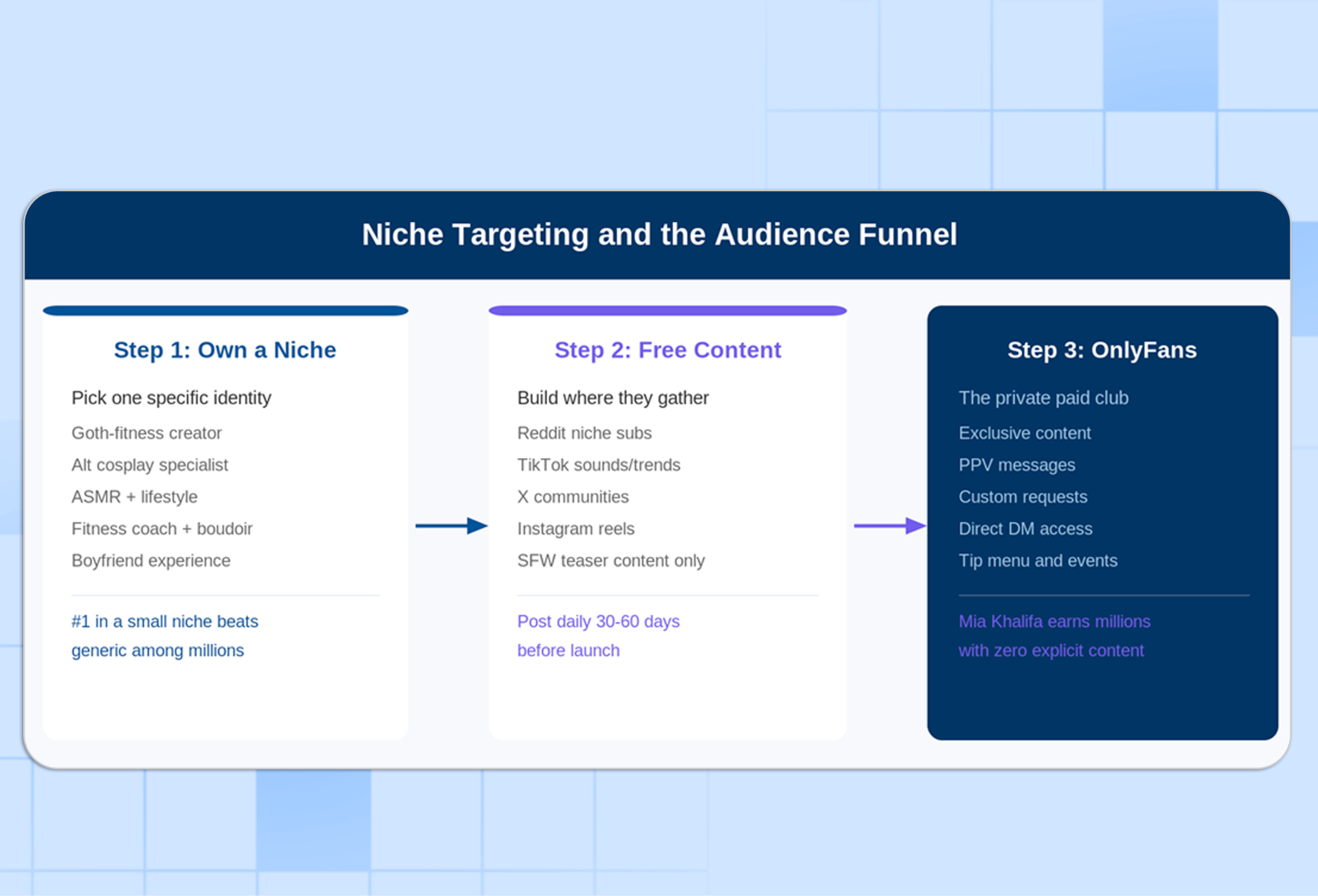
Once the niche is set, the next step is a funnel. Find where the target audience already gathers - specific subreddits, TikTok sounds, X communities - give them free, SFW content that speaks their language, and build a community there. OnlyFans becomes the private, paid club for that community. Mia Khalifa is proof that intrigue alone can convert: she reportedly earns millions posting no explicit content at all, monetizing curiosity, humor, and commentary.
Male creators: the underserved market
Most subscribers are heterosexual men, which makes the paying audience for male content smaller - but the creators who break through earn real money. Tyga holds the male record at about $90 million, though that’s pure celebrity conversion. Among non-celebrity men, Alex Adams has built an estimated $5 million+ with an audience that skews female and LGBTQ - a smaller but higher-spending demographic. Reno Gold turned anonymous fitness content into a top male earner by leaning into mystery and the boyfriend experience rather than explicit volume.
The niches that work best for men tend to be fitness (workout plans plus muscle-worship content), the boyfriend experience built through DMs, and LGBTQ-focused brands. For a non-celebrity male creator, $5,000-$15,000 a month is a realistic top-tier target with the right niche and consistent promotion.
The system: how top earners replicate it
Reaching the top 1% isn’t a secret formula - it’s a repeatable system. The creators who fail usually quit early or refuse to build a real operation.
Build the audience before you launch
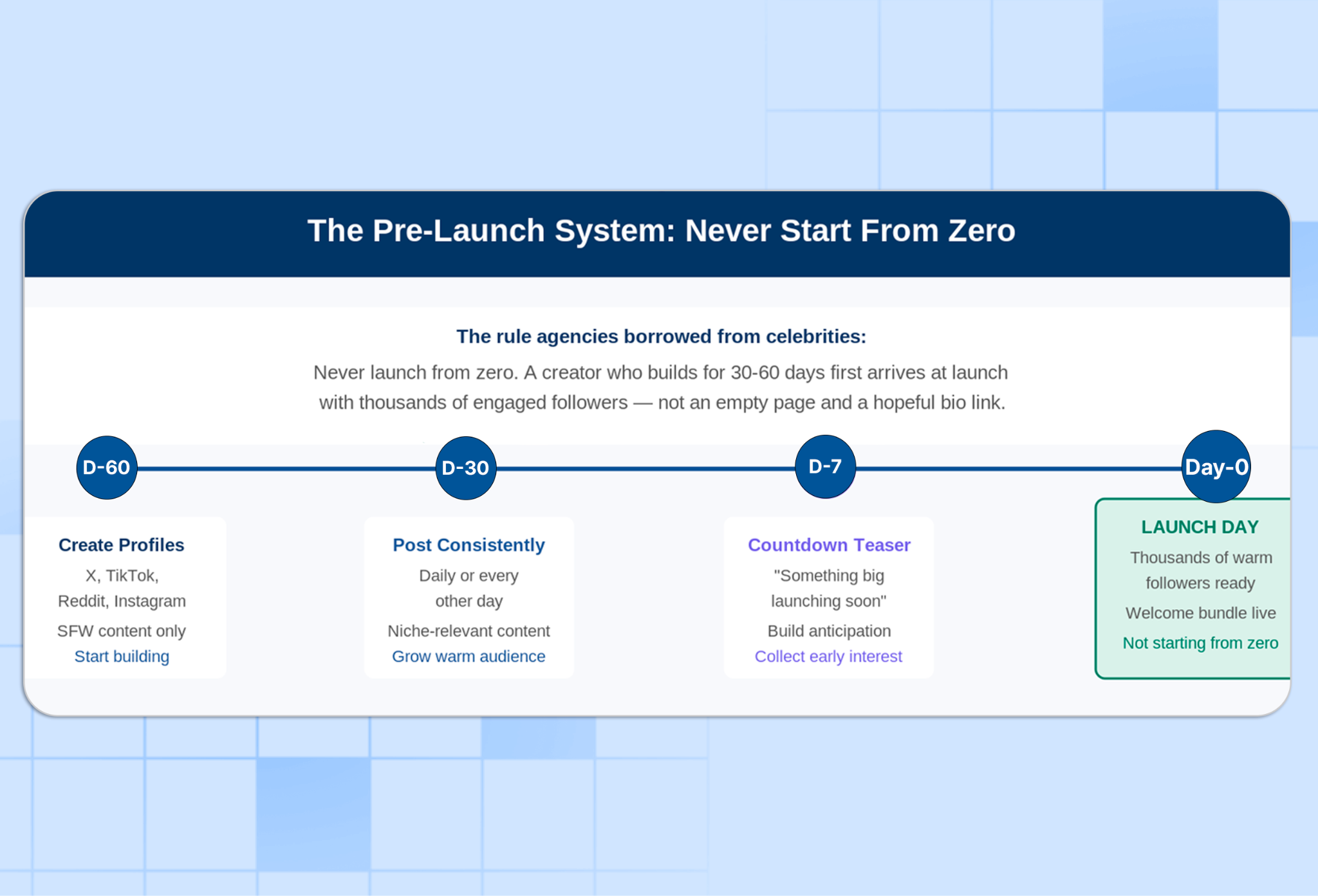
The first rule agencies learned from celebrities: never launch from zero. In the 30–60 days before launch, build SFW profiles on X, TikTok, and Reddit and post consistently, so followers arrive already anticipating the launch. On launch day, you start with thousands of warm, engaged people ready to subscribe - not an empty page.
Production standards
Grainy, badly lit clips lose to professional-looking content - but professional doesn’t mean expensive.
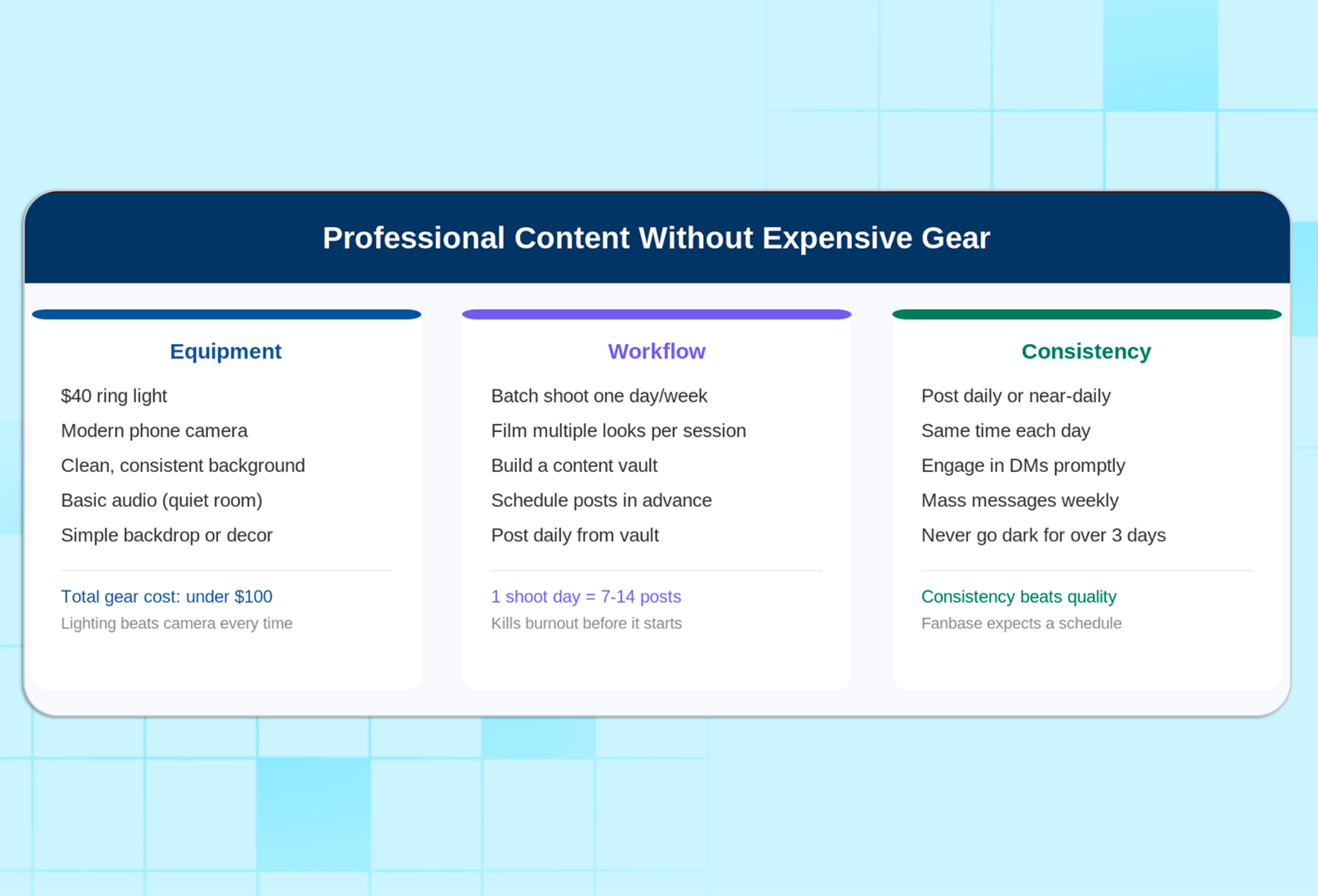
A $40 ring light, a modern phone camera, and a clean background cover the basics. Just as important is workflow: top creators batch-shoot several looks in one session and post from a content vault, keeping the feed active without filming every day. That’s how they avoid the burnout that sinks creators trying to film constantly.
Solo vs agency
A solo creator is performer, editor, chatter, marketer, accountant, and security guard at once - and burnout is the single most common reason creators fail.
| █ Going solo Roles you fill Performer, chatter, marketer, editor, admin - all six Revenue kept 100% of gross Income ceiling Capped by hours in a day Main risk Burnout - top cause of failure | █ With an agency Roles you fill Content only - rest outsourced Revenue kept 50-75% (agency takes 25–50%) Income ceiling Raised - 24/7 chat & promotion Main strength Sustainable; creator acts as CEO |
|---|
An agency handles everything except the content itself: 24/7 chatting, social marketing, PPV and subscription management, scheduling, and the unglamorous work of chargebacks, copyright takedowns, and DMs. The creator gives up 25-50% but trades the role of overworked employee for that of CEO. The math usually favors it: a $5,000/month solo creator who scales to $30,000/month with a team nets more even after fees.
Frequently asked questions
Who is the highest-paid OnlyFans creator?
By reported lifetime earnings, Blac Chyna at roughly $240 million (gross, before fees and taxes). Among non-celebrities, Sophie Rain leads at $43 million+.
How much do top earners make per month?
The very top (top 0.01%) report $500K–$1M+ in gross monthly revenue; the top 1% earn roughly $10,000+ a month. The median active creator makes about $180. Take-home is usually around a third of gross.
Do top earners work with agencies?
It varies. Most celebrities use existing management. Many non-celebrity top earners sign with an agency after hitting a ceiling they can’t push past alone.
What cut do agencies take?
Typically 25% for a minimal chatting-only service, up to 50% for full-service management covering chat, marketing, scheduling, and account management.
Do OnlyFans creators pay taxes?
Yes - it’s taxable self-employment income, generally 30-40% of net, depending on country and bracket. Many new creators underestimate this.
Can an agency replicate top-earner success for a new creator?
It won’t make anyone a celebrity, but the same systems - branding, multi-platform traffic, structured chatting, consistent posting, professional sales - are exactly what separate the top 1% from everyone else.
The takeaway
Reaching the top of OnlyFans is a skill, not luck - but the gap between headline numbers and reality is wider than most people think. Three things separate the creators who last from the ones who quit: a real audience built before launch, a stack of income streams rather than a single subscription fee, and a professional system for selling through DMs. The headline number on any earnings list is gross; the business behind it is what actually pays.
Related insights
Compare your options
Browse agency rankings or compare tools for creator teams.